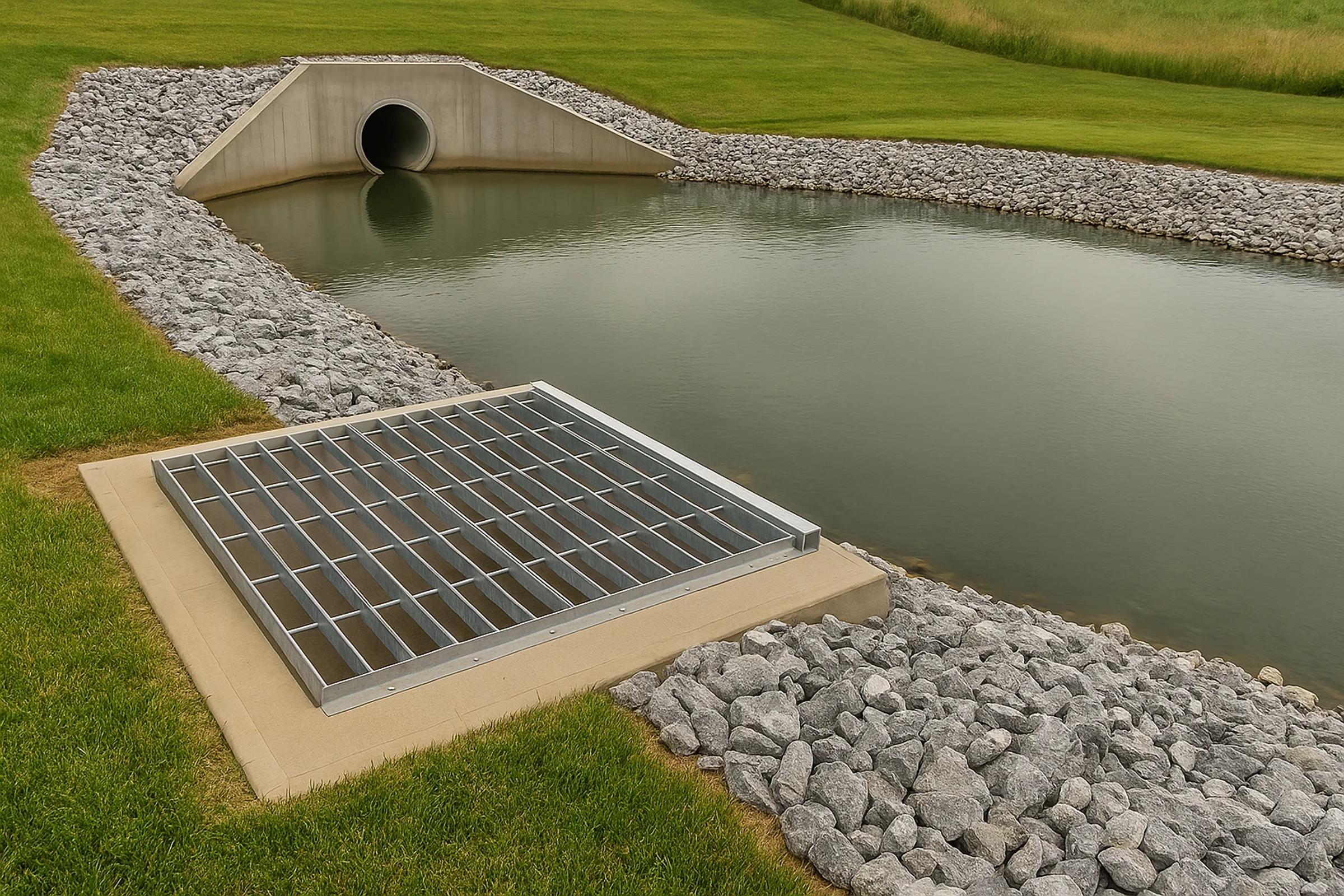
Modelling, pond design and drainage strategies sized to your site and the downstream receiver, not a conservative default that inflates cost and shrinks your developable area.
Conservative assumptions are the cheapest thing an engineer can do. They’re also the most expensive thing you can buy. Every extra square metre of pond is a square metre you don’t sell.
 Pre/post catchment analysis
 Infiltration testing
 Detention design: ponds, tanks, rock pits
 Downstream capacity review
 Master drainage plans
Send us the sitecivic address or legal description, your layout or concept, and the stage you’re at.
We build the path forwardinfiltration testing and catchment analysis set the strategy before anything gets sized.
We carry it throughmodelling, sizing, downstream review, the report the municipality needs and construction support.
Send us the address and your layout. We’ll tell you what the ground can take and what needs to happen next.
Depends on what the soil accepts and what release rate the downstream receiver allows. Where infiltration works, detention can go underground and cost you almost no surface area. Where it doesn’t, the pond is sized by the difference between pre- and post-development runoff, which is why we test the ground before we size anything.
It’s scoped to the modelling the site requires, not its area. A rational-method analysis on an infill lot and a PCSWMM model on a large catchment aren’t the same work. Send us the site and the municipality and we’ll tell you which one it needs.
Large catchments, complex downstream connections and jurisdictions that require dynamic modelling. Spreadsheet tools assume the system behaves simply. When it doesn’t, or when the approving authority requires more, you need the model.
Only if the soil accepts water fast enough, and that’s a field test, not an assumption. Where it works, it’s usually the cheaper answer and it frees up surface area. Where it doesn’t, designing as though it does means redesigning later.
Rock pits and infiltration tanks, sized to the same pre- and post-development criteria and detailed for clogging and maintenance access. Same performance requirement, underground.
Then the release rate you’re allowed drops and the detention you need goes up. We check downstream capacity early because it changes the whole strategy, and where the system is short, we scope the upgrade up front. See site servicing.
Yes, as a standalone scope. You send the project brief; we run the model, size the infrastructure, and issue the report. You keep the project and the client.
